

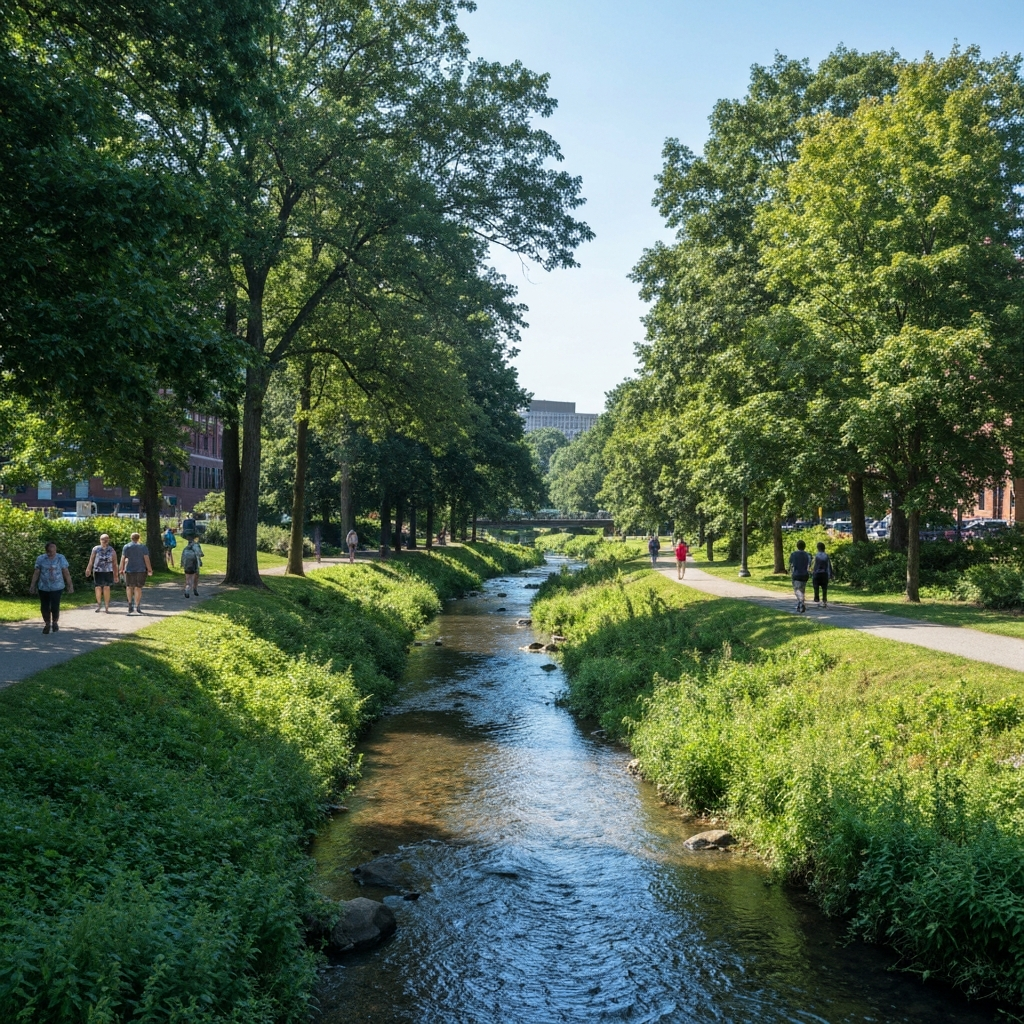
Cambridge is actively addressing the persistent issue of sewage overflows into Alewife Brook, a concern that has significant environmental and public health implications for residents in Cambridge, Arlington, and Somerville.
Understanding the Issue
Alewife Brook has been receiving millions of gallons of untreated sewage during heavy rainfall events due to the region’s outdated combined sewer systems. These systems, which mix stormwater and sewage, can become overwhelmed during storms, leading to overflows into local waterways. In 2024 alone, Alewife Brook experienced 19 million gallons of sewage overflow.
Proposed Solutions and Community Response
The Massachusetts Water Resources Authority (MWRA) has proposed a $1.28 billion plan that includes storage tanks and partial sewer separation to mitigate these overflows. However, this plan stops short of a full overhaul to separate sewage and stormwater pipes, citing cost and disruption concerns.
Environmental activists and local residents, including groups like Save the Alewife Brook and the Charles River Watershed Association, are advocating for full sewer separation to eliminate combined sewer overflows entirely. They argue that the current plan does not go far enough to protect public health and the environment.
Balancing Environmental and Financial Considerations
While the MWRA’s plan aims to balance environmental improvements with financial feasibility, critics view it as a missed opportunity to fully address the issue. The debate continues as stakeholders seek a solution that effectively mitigates sewage overflows while considering the financial impact on residents.
Looking Ahead
A final MWRA plan is expected in January 2027 following public review. In the meantime, Cambridge residents are encouraged to stay informed and participate in community discussions to ensure that the chosen solution aligns with both environmental goals and community needs.