

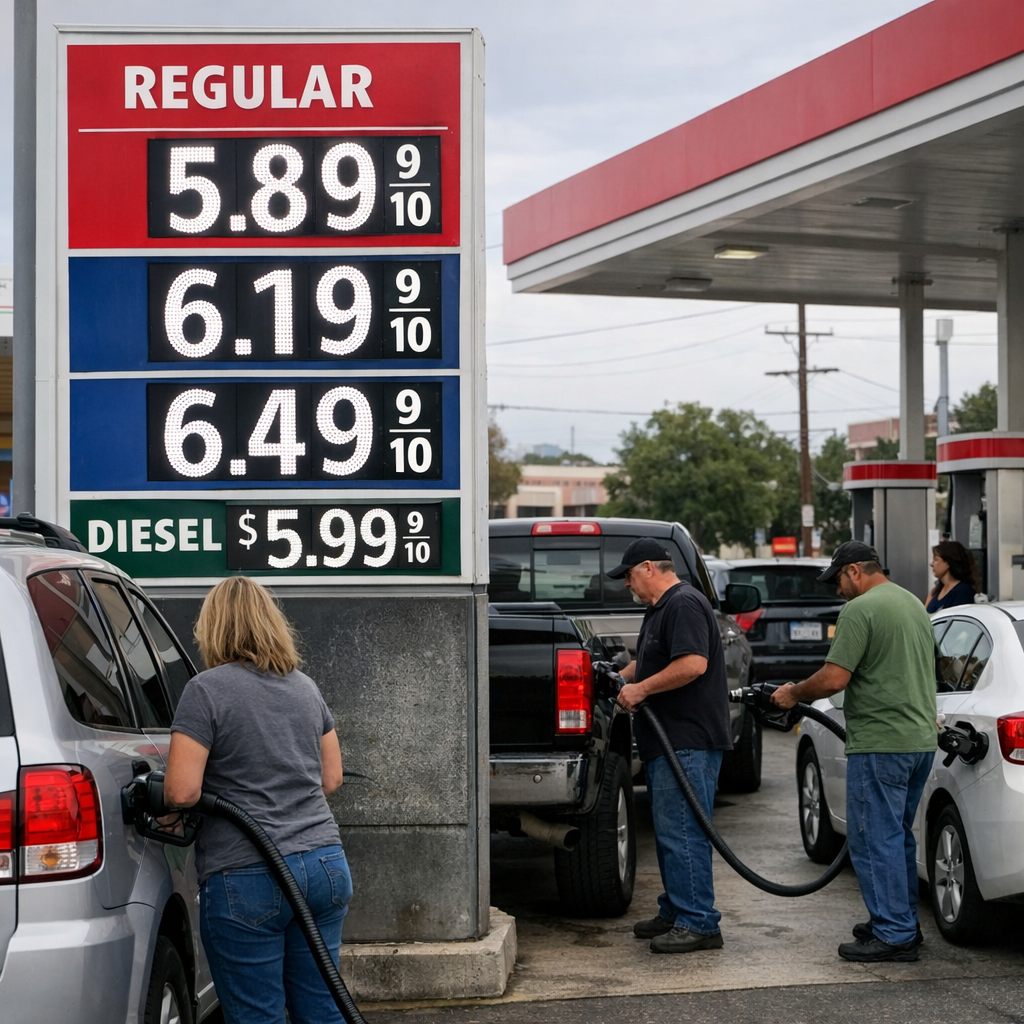
As the nation grapples with economic challenges, recent developments have heightened concerns about financial stability among Americans. Rising inflation and escalating energy costs are at the forefront of these issues, affecting households and businesses alike.
Inflation on the Rise
Inflation has surged to 3.8% in April, marking its highest level in three years. This uptick is largely attributed to increased energy prices following the military conflict with Iran that began in February. The closure of the Strait of Hormuz has led to a significant rise in energy costs, impacting various sectors of the economy.
Energy Costs and Consumer Impact
The national average price of regular gasoline has exceeded $4.50 per gallon, with some states experiencing prices above $5. This surge in fuel costs has placed additional financial strain on consumers, leading to a decline in confidence regarding economic policies. A recent CBS News/YouGov poll indicates that 70% of Americans feel “angry” or “frustrated” about the current handling of the economy.
Federal Reserve’s Response
In response to these economic pressures, the Federal Reserve has signaled continued support by maintaining interest rates at 3.6%. However, the International Monetary Fund has expressed concerns about the growing federal budget deficit, emphasizing the need for sustainable fiscal policies to ensure long-term economic stability.
Looking Ahead
As the nation approaches the midterm elections, economic issues are expected to play a pivotal role in shaping voter sentiment. Policymakers face the challenge of addressing inflation and energy costs while fostering economic growth and stability.