

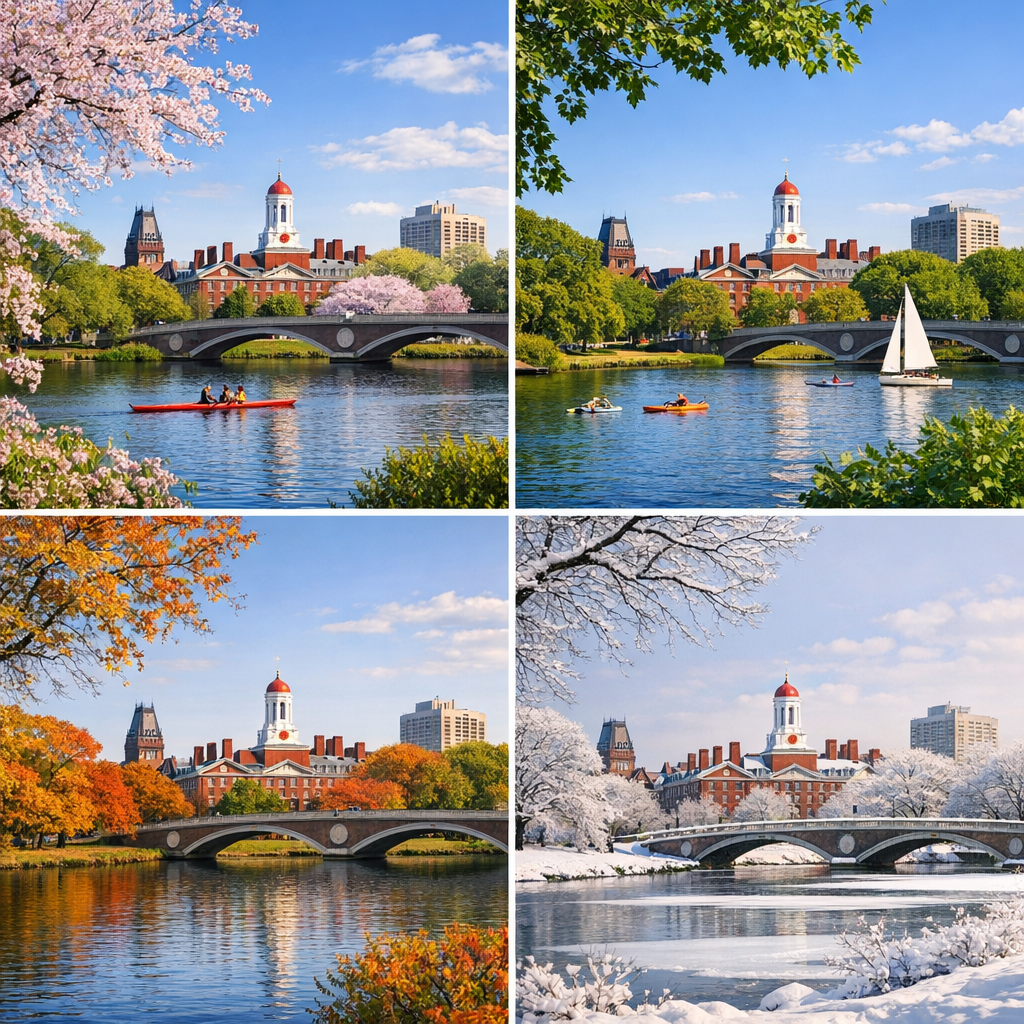
Cambridge, Massachusetts, experiences a diverse range of weather conditions throughout the year, characteristic of a humid continental climate. Understanding these patterns is essential for residents and visitors alike.
Seasonal Weather Patterns
Winter
From December through February, Cambridge faces cold and snowy conditions. Average high temperatures hover around 39.6°F (4.2°C), with lows dipping to 22.5°F (-5.3°C). Snowfall is common, with December averaging up to 0.71 inches (18mm). Reduced daylight hours, approximately 9.1 hours in December, contribute to the season’s harsh ambiance.
Spring
March to May brings a gradual warming trend. Temperatures rise from an average high of 43.3°F (6.3°C) in March to 66.7°F (19.3°C) in May. Rainfall increases during this period, peaking at 0.59 inches (15mm) in April. Nights can still be chilly, especially in early spring, with temperatures dipping to 40.1°F (4.5°C).
Summer
June through August are characterized by warm temperatures, with average highs reaching up to 81.9°F (27.7°C) in July. Nights remain relatively warm, averaging around 64.6°F (18.1°C). Rainfall during summer averages around 0.51 inches (13mm) in June.
Autumn
September to November sees a pleasant drop in temperatures, from 72.9°F (22.7°C) in September to 49.5°F (9.7°C) in November. Rainfall peaks at 0.63 inches (16mm) during November. Daylight hours gradually decrease, marking the transition to winter.
Climate Change Impacts
Climate change is expected to influence Cambridge’s weather patterns. Projections indicate an increase in average summer temperatures by approximately 4°F by the 2030s, potentially tripling the number of days each year above 90°F. Additionally, increased precipitation, sea-level rise, and storm surges pose challenges to the city’s infrastructure.
To address these challenges, the City of Cambridge has developed the Resilient Cambridge Plan, focusing on strategies to mitigate and adapt to the anticipated changes.
Staying informed about these patterns and ongoing initiatives is crucial for the community’s preparedness and resilience.